
If you’ve ever spent time around a real job site, you’ll notice something pretty quickly: it never stays clean for long. Things might start organized in the morning, but by midday, there’s usually debris everywhere. Cut wood, broken drywall, packaging, and roofing scraps. It just builds up faster than anyone expects.
And the funny part is, nobody really has time to deal with it when work is in full swing. So it just sits there, slowly getting in the way. That’s usually when experienced contractors don’t wait for things to get messy.
They just bring in a trusted dumpster rental in Sugarmill Wood early and keep moving. No drama, no constant cleanup breaks, just a place to throw everything and stay focused on the job.
From what I’ve seen, the difference is pretty obvious. The crews that plan for waste early tend to have fewer delays and way less frustration at the end.
Why Roll-Off Containers Became the Default
People sometimes think dumpsters are optional. Like a “nice-to-have.” But on active job sites, that’s not really true.
What usually happens without one is pretty predictable. Waste starts piling up in corners. Someone says, “We’ll deal with it later.” And later never really comes until the site is basically slowed down by junk everywhere.
A roll-off container fixes that in a very direct way; everything goes in one place, immediately. It’s not fancy. But it works.
What Usually Goes Wrong Without a Dumpster
I’ve seen this pattern too many times:
Workers waste time walking debris back and forth
Materials get mixed with trash and become harder to handle later
Small injuries happen more often because the site gets cluttered
Cleanup at the end turns into a full extra job
And honestly, morale drops when the place is messy
The biggest problem isn’t even time. It’s focus. People just work more slowly when the site feels chaotic.
What Actually Works on a Job Site
When a roll-off dumpster rental is on-site from day one, things just flow better. Not perfectly, but better.
1. Cleanup becomes automatic
Nobody has to think about where waste goes. It just goes.
2. The site feels “controlled”
This sounds simple, but it matters. A clean site keeps people moving.
3. Fewer arguments and delays
No one is debating where trash should go or who is responsible.
4. Less end-of-job stress
This is the big one. Final cleanup doesn’t turn into a nightmare.
Residential vs Job Site Reality
A residential dumpster rental is usually used for home projects, but even there, the same pattern shows up.
People think they’ll “just handle the trash later.” Then later becomes a garage full of junk bags and two extra weekends of work.
A dumpster solves that early. No overthinking. No second-guessing.
Roll-Off Dumpster vs Junk Removal
Both have their place, but people mix them up too often.
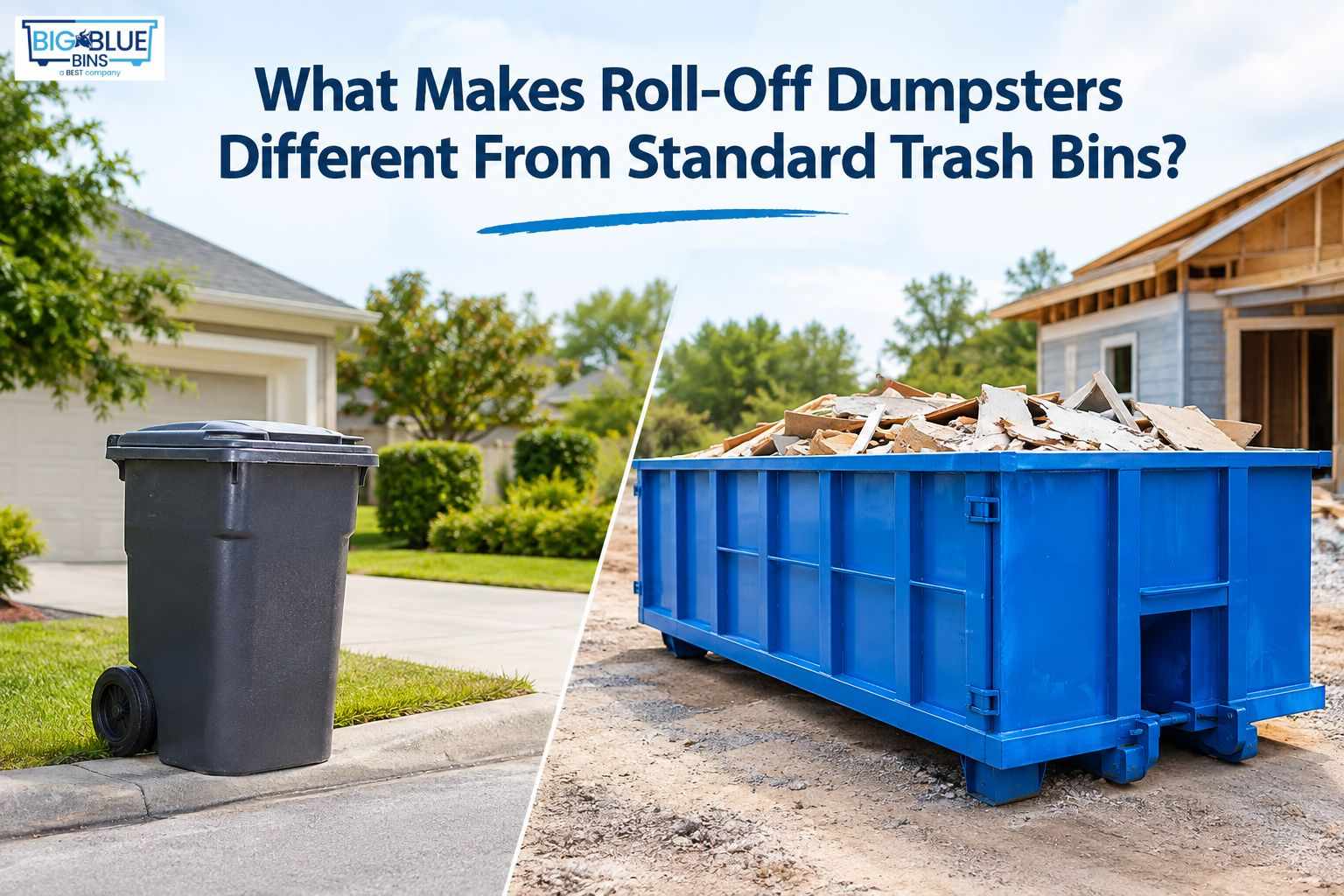
Roll-off dumpsters allow continuous waste disposal on-site, while junk removal works after debris has already piled up.
With a roll-off dumpster, you control cleanup timing, but junk removal requires waiting for a pickup crew.
Roll-off dumpsters are better for ongoing work like renovations or construction, while junk removal fits small, one-time cleanouts.
In real job sites, roll-off dumpsters reduce downtime since workers don’t have to stop for scheduled pickups.
Planning Waste Early
This is where most projects go wrong. People focus on materials, labor, timelines, but waste? It gets ignored until the site is already messy.
What actually works is simple: Decide on waste handling before work starts.
That’s why experienced crews follow something close to a construction waste and sanitation guide. Not because it sounds official, but because it avoids chaos later.
Why Contractors Keep Using Roll-Off Containers
Over time, contractors don’t even debate it much. Because they’ve already seen what happens without it.
Delays increase
Sites get messy fast
Labor time gets wasted
And cleanup becomes a second project
So they just stick with what works. Not because it’s trendy, but because it avoids problems they’ve already dealt with before.
Choosing the Right Size (People Still Get This Wrong)
This part is more important than it looks.
1. Small remodel projects like bathroom upgrades or minor interior work usually fit well in a 10–15 yard dumpster without running out of space.
2. Medium renovation jobs, such as kitchen remodels or flooring updates, generally work best with a 20-yard dumpster for steady waste flow.
3. Full construction or demolition projects create heavy debris and usually need 30–40 yard dumpsters to stay manageable.
What often fails is underestimating debris. People always think, “We won’t have that much waste.” Then they do. And that’s when overflow becomes another problem.
Why Cleanup Planning Matters More Than People Think
Most project delays don’t actually come from construction work itself. They come from poor cleanup planning.
What usually works is simple: decide on waste handling before the first hammer swings. When a dumpster is already on-site, everything stays controlled from day one.
What often fails is waiting until the site is already messy. At that point, cleanup becomes reactive instead of planned, and that’s when things slow down.
Personally, I think this is where most contractors either save time or lose it. The ones who plan waste early, often with Big Blue Bins, almost always finish smoother, even if the job is bigger or more complex.
Conclusion
Here’s the simple truth. Roll-off containers aren’t complicated. They’re just practical. Contractors depend on them because, without one, things slowly fall apart; mess builds up, time gets wasted, and the job becomes harder than it needs to be. Could you manage a project without one? Sure. But from what I’ve seen, it rarely goes smoothly.
A dumpster on-site just makes the job feel under control. And in construction, that feeling matters more than people admit. And honestly, once crews get used to working with Big Blue Bins, they rarely go back to working without them. It just becomes part of how a job gets done right.
FAQs
1. Why do contractors prefer roll-off dumpsters?
Because they keep the job site organized and prevent waste from piling up. It helps crews work faster without constant cleanup interruptions.
2. What size dumpster is usually needed?
Most jobs use 10–40 yard dumpsters, depending on project size. Smaller remodels need less space, while construction work usually needs larger containers.
3. Is junk removal better than a dumpster?
Not for ongoing projects. Junk removal works for one-time cleanups, but dumpsters are better when waste is generated daily.
4. Can homeowners use dumpsters, too?
Yes, especially for renovations or big cleanouts. A residential dumpster rental makes disposal much easier and saves multiple trips.
5. When should a dumpster be ordered?
Before the project starts. This helps avoid delays and keeps the site organized from day one.
6. What can go inside a roll-off dumpster?
Most non-hazardous waste, like wood, drywall, furniture, and yard debris, is allowed. Chemicals and paint are usually not accepted.
7. What happens if the dumpster fills up early?
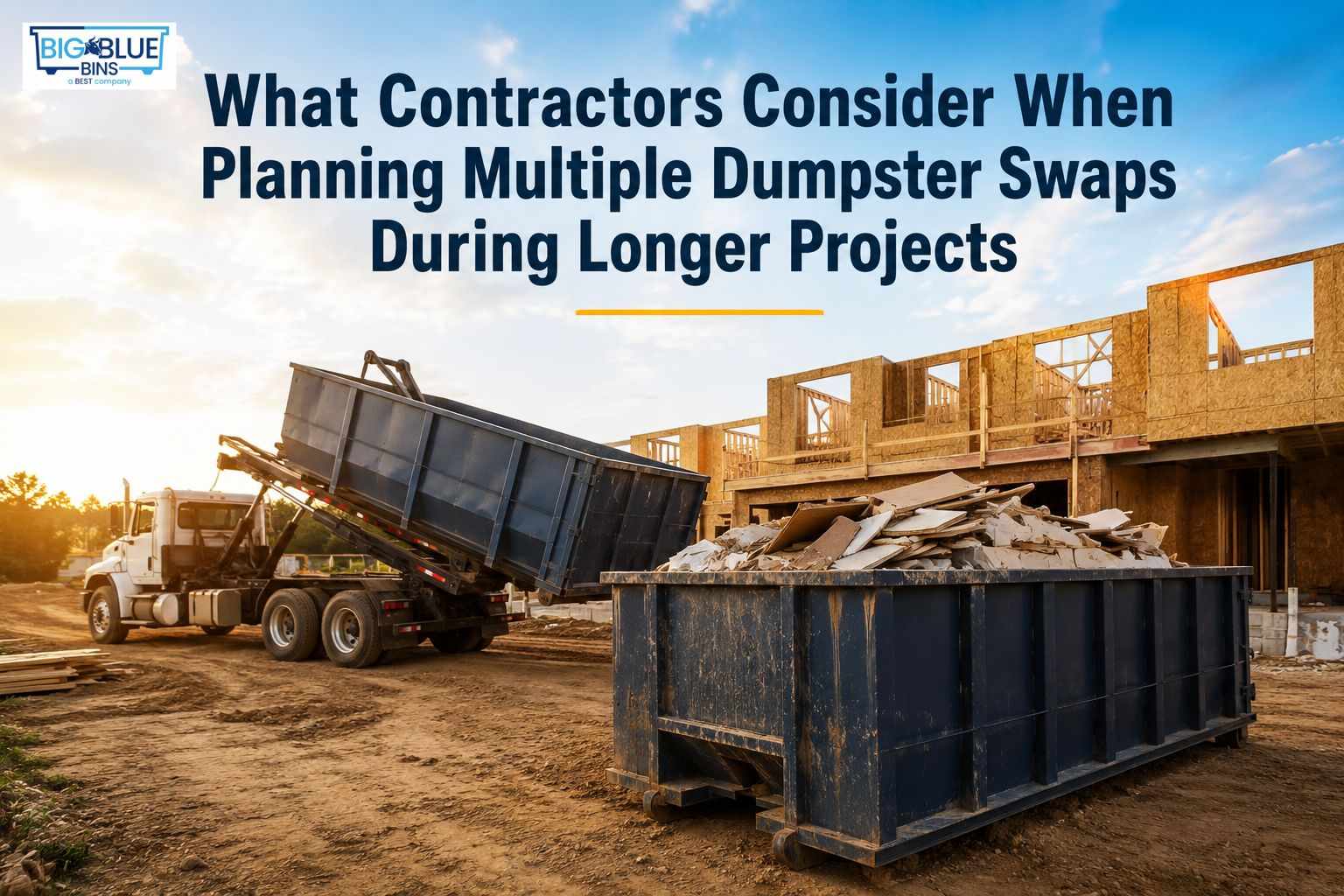
It can be swapped or emptied, but choosing the right size upfront helps avoid this issue.

Write a comment ...